
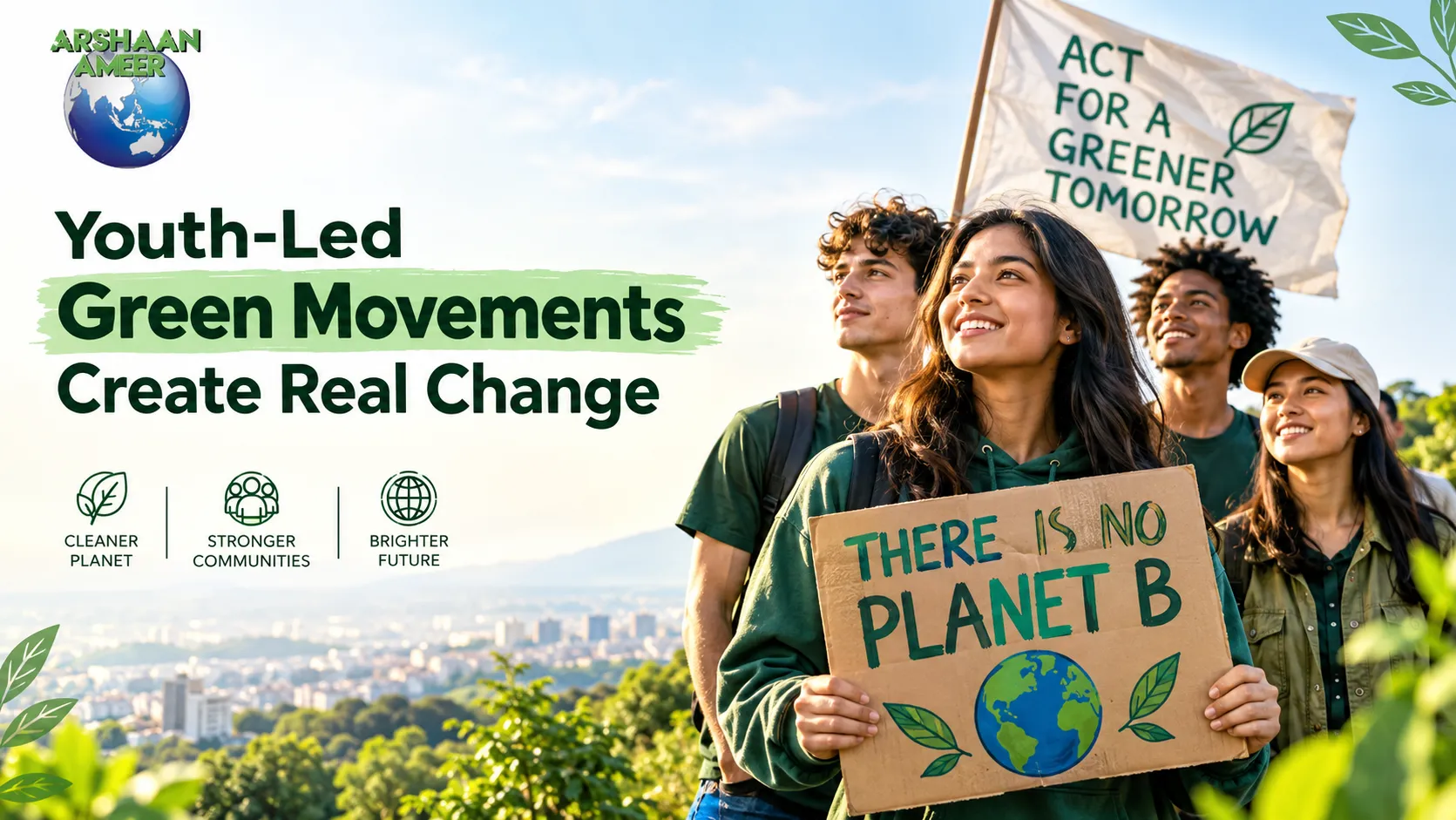
Why Youth-Led Environmental Movements Are the Most Powerful Climate Movements
The future of our planet is being shaped by the decisions we make today, but it is young people who will live with the consequences for the longest time. From rising temperatures and plastic pollution to disappearing forests and extreme weather, environmental challenges are becoming harder to ignore. Across the world, young people are stepping forward to demand change, inspire communities, and turn climate awareness into meaningful action.
A Youth-led environmental movement is more than a campaign to protect nature. It is a growing effort to influence public thinking, encourage responsible habits, and hold decision-makers accountable for environmental commitments. By combining fresh ideas, digital communication, community participation, and a strong sense of purpose, young people are helping reshape the global conversation about climate change.
But what makes these movements so influential? Their strength lies not only in the number of people involved but also in their ability to connect scientific knowledge with everyday experiences, challenge established thinking, and encourage people of different generations to work towards a healthier planet.
What Makes Youth-Led Environmental Movements So Powerful?
Youth-led climate movements stand out because they bring urgency, creativity, and long-term commitment to environmental issues. Young people are not simply waiting for solutions to emerge; many are actively participating in projects that address pollution, waste management, biodiversity loss, and climate awareness.
Unlike traditional campaigns that may focus mainly on spreading information, youth-led initiatives often encourage people to participate directly. Students may organise campus clean-ups, neighbourhood groups may plant native trees, and young volunteers may conduct awareness sessions about reducing single-use plastics.
These activities demonstrate that environmental protection does not always require large budgets or complicated systems. Small, coordinated efforts can help communities understand local environmental problems and take practical steps to address them.
Another important factor is accountability. Young campaigners can use peaceful demonstrations, petitions, public discussions, and social media to encourage institutions and governments to take environmental responsibilities seriously. When these efforts are supported by credible research and constructive dialogue, they can contribute to wider public awareness and policy discussions.
1. Young People Have a Strong Personal Stake in the Planet’s Future
Climate change is not a distant problem that belongs to the next generation. Its effects are already influencing food security, water availability, public health, livelihoods, and the safety of communities. Young people will experience the long-term consequences of many environmental decisions made today, which gives them a compelling reason to demand responsible action.
This personal connection often encourages young activists to look beyond temporary solutions. They want cleaner cities, reliable access to natural resources, healthier ecosystems, and policies that protect people as well as the environment.
The United Nations recognises young people as important contributors to climate solutions, including through education, science, technology, and public participation. Their involvement helps bring future generations' concerns into discussions that might otherwise overlook them.
However, being young does not automatically make someone an environmental expert. The real strength of youth movements comes when passion is supported by scientific knowledge, practical experience, and a willingness to learn from communities and specialists.
2. Social Media Helps Environmental Messages Reach More People
A local environmental concern can become a much larger conversation when people share it online. Social media gives young campaigners accessible ways to publish educational videos, highlight environmental problems, promote community events, and connect with people who share similar goals.
For example, a student group raising awareness about plastic waste can share information about reusable alternatives, document a local clean-up, and encourage other schools to organise similar activities. Photographs, short videos, and personal stories can make environmental topics easier to understand and discuss.
Digital platforms also allow young people to collaborate across geographical boundaries. A volunteer in one country can learn from a conservation project in another, adapt useful ideas, and share the results with their own community.
Still, online attention should support meaningful action rather than replace it. Reliable information, credible sources, and clear explanations are essential because environmental misinformation can create confusion.
The most effective campaigns connect digital awareness with measurable activities, such as reducing waste, restoring green spaces, or encouraging institutions to adopt more sustainable practices.
3. Youth Climate Action Programs Turn Ideas into Real Solutions
Enthusiasm can start a movement, but the right support helps it grow. Young people often need access to training, mentors, funding, practical resources, and opportunities to work with local organisations.
A well-designed Youth climate action program can provide these opportunities by helping participants understand environmental challenges and develop projects suited to their communities.
Such programs can include:
- Environmental education: Learning about climate change, biodiversity, pollution, and sustainable resource use.
- Community projects: Organising waste segregation drives, neighbourhood clean-ups, tree care activities, and water conservation campaigns.
- Leadership development: Building communication, teamwork, planning, and project management skills.
- Green innovation: Exploring renewable energy, recycling solutions, sustainable products, and environmentally responsible business ideas.
- Policy participation: Helping young people contribute informed recommendations to schools, community bodies, and public discussions.
These activities can give young participants practical experience while helping them understand how environmental decisions are made.
There are already examples of this approach in practice. UNICEF's work through The Green Rising initiative supports youth-led projects, skills development, and opportunities for young people to contribute to environmental solutions. UNICEF reported that the initiative had engaged 11 million young people across 30 countries by the end of 2024.
This demonstrates how structured opportunities can help young people move from concern to participation and, eventually, leadership.
4. A Green Future Initiative Can Begin at the Community Level
Large environmental challenges can feel overwhelming when viewed as a whole. However, communities can make progress by identifying specific problems and working together on realistic solutions.
A Green future initiative can bring students, teachers, residents, businesses, and community organisations together around shared environmental goals. Rather than focusing only on awareness, it can encourage participants to take responsibility for changes they can sustain over time.
Consider a school that wants to reduce its environmental footprint. Students could begin by checking how much paper is wasted, identifying opportunities to save electricity, improving waste segregation, and encouraging reusable water bottles. Teachers could help track progress, while local organisations might provide guidance or resources.
The same approach can work in neighbourhoods. Residents could organise composting activities, protect local water bodies, plant suitable native species, or encourage businesses to reduce unnecessary packaging.
For such initiatives to succeed, goals should be specific and realistic. Planting trees, for example, is more meaningful when organisers also consider suitable species, local growing conditions, watering, and long-term survival.
Progress should be measured wherever possible. Tracking the amount of waste diverted from landfills, the number of participating households, or the survival rate of planted trees helps communities understand what is working and where improvements are needed.
When young people participate in planning and evaluation, they learn that environmental responsibility involves consistency, not just enthusiasm.
5. An Eco Movement for Young People Encourages Collective Responsibility
Individual lifestyle choices matter, but many environmental problems require coordinated solutions. Transport systems, energy production, manufacturing, waste collection, and urban planning all influence the environmental impact of everyday life.
An Eco movement for young people can help connect personal habits with these wider systems. It encourages participants to make responsible choices while recognising that governments, businesses, and institutions also have important responsibilities.
Young people can contribute in several practical ways:
- Encouraging waste reduction and responsible recycling in schools and colleges.
- Promoting walking, cycling, public transport, or carpooling where practical and safe.
- Supporting local conservation and biodiversity projects.
- Sharing verified information about environmental issues.
- Asking institutions to improve energy efficiency and waste management.
- Participating in public consultations and constructive environmental advocacy.
Collective participation makes these actions more visible and can encourage others to join.
It is equally important to make environmental movements inclusive. Young people from rural communities, low-income households, and areas facing severe environmental risks may have valuable knowledge but fewer opportunities to participate. Accessible events, local-language resources, and flexible volunteering options can help broaden involvement.
An effective movement does not expect everyone to contribute in the same way. Instead, it creates opportunities for people to use their skills, experiences, and available resources to support a shared purpose.
6. Youth Movements Can Influence Public Policy and Institutional Decisions
Community activities can make a direct difference, but long-term environmental progress also depends on decisions made by governments and institutions. Young people can help bring attention to these decisions by presenting evidence, organising consultations, signing petitions, and participating in climate forums.
Their involvement is not limited to public demonstrations. Young environmental advocates can research local concerns, consult affected residents, develop practical recommendations, and communicate their findings to decision-makers.
India offers an example of this approach. In 2024, the Local Conference of Youth in Mysuru brought young participants together to discuss climate resilience, youth leadership, and meaningful participation in environmental policy. The resulting National Youth and Children's Statement reflected priorities raised by young people from across the country.
Such participation helps connect local experiences with wider policy discussions. It also gives young people opportunities to understand how environmental commitments can be translated into practical action.
However, influence requires more than visibility. Recommendations are stronger when they are based on reliable evidence, consider the needs of affected communities, and identify realistic steps for implementation.
Decision-makers also need to provide genuine opportunities for youth participation. Inviting young people to speak is a useful beginning, but listening to their recommendations and explaining how those contributions inform decisions is what makes participation meaningful.
7. Challenges Youth Environmental Movements Must Overcome
Despite their potential, youth-led movements face several obstacles. Recognising these challenges is essential to building campaigns that remain effective over time.
Limited funding and resources
Many student groups and young volunteers depend on personal contributions or small donations. Access to grants, equipment, training, and supportive partnerships can help them maintain projects and expand their reach.
Climate anxiety and burnout
Constant exposure to environmental news can leave young people feeling worried or powerless. Supportive communities, achievable goals, shared responsibilities, and visible progress can help participants remain engaged without feeling that the entire burden rests on them.
Lack of representation
Some young people have fewer opportunities to attend conferences, access decision-makers, or receive environmental training. Movements need to make space for different backgrounds, abilities, and experiences rather than allowing only the most privileged voices to be heard.
Misinformation and unrealistic expectations
Environmental claims should be checked against trustworthy research. Campaigners must also understand that complex problems rarely have one simple solution. Accurate communication builds credibility and helps communities make informed decisions.
Difficulty maintaining momentum
A successful event can generate attention, but lasting change requires follow-up. Clear responsibilities, regular progress reviews, partnerships, and long-term planning help prevent projects from disappearing after their initial launch.
Addressing these challenges does not weaken youth movements. It makes them more resilient, responsible, and capable of delivering lasting results.
8. How Young People Can Start Making a Difference Today
Getting involved in environmental action does not require starting a large organisation. A small project with a clear purpose can provide a practical starting point.
Here is a simple approach for anyone who wants to contribute:
- Choose a local issue. Identify a concern such as plastic waste, water wastage, poor waste segregation, or the loss of green spaces.
- Learn before taking action. Research the issue, speak with people affected by it, and consult reliable environmental resources.
- Bring together a small team. Invite classmates, friends, neighbours, teachers, or local volunteers to participate.
- Set a realistic goal. Decide what the group wants to achieve within a specific period, such as improving waste segregation in one school.
- Work with relevant partners. Contact community organisations, local authorities, environmental educators, or experienced volunteers when appropriate.
- Measure the results. Record participation, resources used, and changes achieved instead of relying only on photographs or social media engagement.
- Build on what works. Review the project, learn from mistakes, and continue or expand the activities that produce useful results.
This approach helps young people develop practical skills while contributing to environmental improvement.
Schools, colleges, youth clubs, and community organisations can make participation easier by offering guidance, providing safe volunteering opportunities, and recognising students' contributions.
Most importantly, young people should not feel that they must solve every environmental problem alone. Collaboration with experienced professionals, local communities, and public institutions is essential for turning promising ideas into lasting solutions.
The Future of Climate Action Needs Young Voices
The power of youth-led environmental movements comes from their ability to combine fresh perspectives, collective effort, public awareness, and a long-term interest in the planet's future. Young people are helping communities recognise environmental problems, explore practical solutions, and demand greater accountability from those responsible for major decisions.
From neighbourhood conservation projects to international climate discussions, their participation can influence how society understands and responds to environmental challenges. Yet meaningful progress depends on more than enthusiasm. Education, reliable evidence, inclusive participation, institutional support, and consistent follow-through are all essential.
A sustainable future cannot be built by one generation alone. Governments, businesses, communities, educators, and individuals must work together to reduce environmental harm and protect natural resources.
Young people can help lead that effort by asking difficult questions, testing new ideas, supporting their communities, and continuing their work beyond a single campaign. When their voices are heard and their efforts receive the support they need, climate action becomes more than a demand for change. It becomes a shared commitment to making that change possible.