
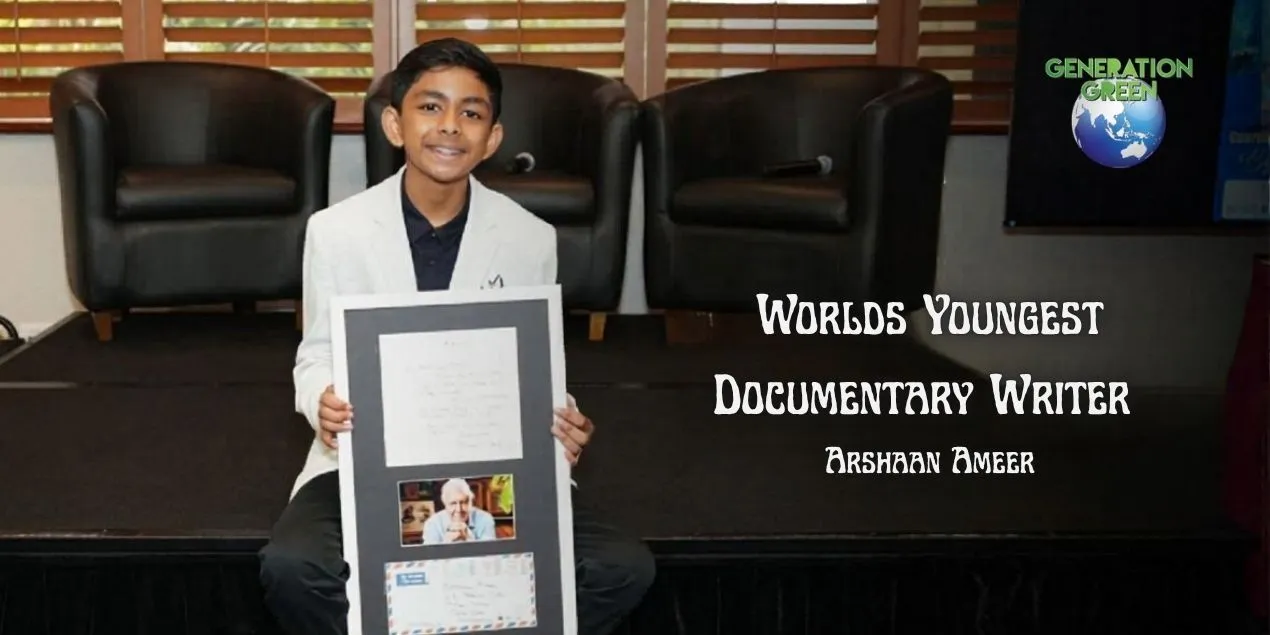
How Arshaan Ameer Became the World's Youngest Documentary Writer
Documentary filmmaking has long been associated with experienced directors, large production teams, and years of research. Yet every so often, a young creator emerges who proves that passion, curiosity, and persistence can overcome any age barrier. Arshaan Ameer is one such individual. His story has drawn international attention—not because he followed a traditional path, but because he chose to explore real‑world issues, research complex global topics, and transform them into meaningful visual stories while still in primary school.
In a world where most children focus on schoolwork and games, Arshaan took a different direction. His journey shows that creativity, discipline, and strong mentorship can help young individuals achieve extraordinary milestones. Today, Arshaan is recognised globally for his groundbreaking achievement in documentary filmmaking. His work demonstrates how storytelling can inspire people to think about important issues like sustainability and climate change.
How Did Arshaan Ameer Become the World's Youngest Documentary Writer?
At the age of 10 years, 10 months, and 15 days, Arshaan Ameer completed a short documentary titled Generation Green. The film focuses on climate change and environmental protection—a topic he felt deeply about. After its release in 2023, the six‑minute documentary earned a place in the Australian Book of Records, officially recognising Arshaan as the world's youngest documentary writer and director.
The project was far more than a school assignment. It involved:
- Research into environmental science and climate data.
- Script writing tailored to a young audience.
- Filming on location across the Gold Coast, Queensland.
- Editing and post‑production work.
- Collaboration with mentors and local experts.
Arshaan's dedication to addressing environmental issues made the film both educational and impactful. The record‑breaking achievement highlights that storytelling can begin at any age when curiosity and commitment are strong.
Key Achievements at a Glance
| Achievement | Details |
|---|---|
| Age at Record | 10 years, 10 months, 15 days |
| Documentary Title | Generation Green |
| Film Duration | 6 minutes |
| Main Topic | Climate change awareness and sustainability |
| Recognition | Australian Book of Records |
| Location | Gold Coast, Queensland |
Arshaan Ameer Early Life: The Foundation of a Young Filmmaker
Arshaan Ameer's early life played a significant role in shaping his interest in filmmaking and storytelling. Growing up in Australia, he developed a natural curiosity about environmental challenges and social issues.
Influences During Childhood
Several factors contributed to his creative development:
- Exposure to educational documentaries – He regularly watched nature programmes, particularly those narrated by Sir David Attenborough. These films sparked his interest in how visuals and narration can convey powerful messages.
- Interest in environmental protection – From a young age, Arshaan showed concern for issues like plastic pollution and wildlife conservation.
- Support from family and mentors – His family encouraged his curiosity and connected him with experienced filmmakers who could guide his technical and creative skills.
- Participation in film workshops – Hands‑on workshops gave him early exposure to camera work, scripting, and editing.
Role of Mentors
Filmmaker Joy K. Mathew played a key role in mentoring Arshaan's filmmaking journey. Through structured training and workshops, Arshaan learned important skills such as storytelling structure, script development, camera handling, and the ethical considerations of documentary production.
These early experiences shaped his understanding of how documentaries can influence people and create awareness—a lesson that later became the foundation of Generation Green.
What Makes a Documentary Child Filmmaker Unique?
A documentary child filmmaker brings a distinct perspective to storytelling. Unlike traditional filmmakers, children often approach topics with a combination of curiosity, honesty, and emotional authenticity that resonates with audiences of all ages.
Advantages of Young Filmmakers
| Advantage | Explanation |
|---|---|
| Fresh perspective | Children see global issues without the filter of industry conventions, often highlighting aspects adults overlook. |
| Strong curiosity | Their natural drive to ask "why" leads to thorough research and genuine engagement with the subject. |
| Creative fearlessness | Young creators are often more willing to experiment with narrative styles and visual techniques. |
| Connection with young audiences | Films made by children often speak directly to other children, making educational content more relatable. |
Young creators like Arshaan demonstrate that filmmaking is not limited by age. Instead, passion and dedication can lead to remarkable results.
Age vs Achievement in Filmmaking
| Age Range | Typical Milestone |
|---|---|
| 8 – 10 | Learning storytelling basics; making short videos for school or family |
| 10 – 12 | Creating short films with structured narratives; participating in youth workshops |
| 12 – 16 | Entering youth film festivals; developing technical skills in editing and sound |
| 16+ | Pursuing professional filmmaking pathways, internships, or advanced studies |
Arshaan's achievement stands out because he completed a world‑record documentary at just 10 years old—far earlier than most filmmakers begin their careers.
How to Make a Documentary: Lessons from Arshaan Ameer's Journey
Many aspiring filmmakers search for guidance on how to make a documentary. Arshaan's process offers a practical blueprint.
Step 1: Choose a Meaningful Topic
Great documentaries start with a strong message. Arshaan selected climate change because he saw it as an urgent issue affecting his generation. The topic gave the film both educational value and social relevance.
Step 2: Research and Gather Information
Documentaries rely on facts and evidence. Arshaan's research included:
- Scientific studies on global warming and its effects.
- Expert interviews with environmental scientists and educators.
- Real‑life examples of sustainable practices in the local community.
Step 3: Write a Documentary Script
A documentary script typically includes:
- Introduction – Presenting the topic and why it matters.
- Key issues or problems – Explaining the challenges in clear, age‑appropriate language.
- Interviews or evidence – Incorporating expert opinions and data.
- Solutions or call to action – Offering practical steps the audience can take.
Arshaan structured Generation Green around these elements, ensuring the film was informative without being overwhelming.
Step 4: Film and Capture Visual Content
Filming involved:
- Recording interviews with local environmental advocates.
- Capturing real‑world scenes of parks, beaches, and recycling facilities.
- Using narration to guide the viewer through the story.
Step 5: Edit the Story
Editing transforms raw footage into a cohesive narrative. Arshaan worked with his mentor to combine visuals, music, and narration in a way that kept the six‑minute runtime engaging and impactful.
Documentary Creation Timeline (Example)
| Phase | Estimated Duration |
|---|---|
| Idea Development | 2 – 4 weeks |
| Research | 1 – 2 months |
| Filming | 2 – 3 weeks |
| Editing | 3 – 4 weeks |
| Final Production | 1 week |
Arshaan's project reportedly took over two years from initial concept to final release—demonstrating that quality documentary work requires patience and dedication.
The Impact of Arshaan Ameer's Documentary
Generation Green focuses on raising awareness about environmental protection and climate change. It highlights simple, actionable steps people can take to protect the planet, such as reducing single‑use plastics, conserving water, and supporting local conservation efforts.
Key Environmental Messages
- Reduce waste and pollution through everyday choices.
- Protect forests, wildlife, and natural habitats.
- Encourage responsible consumption and recycling.
- Promote sustainability awareness in schools and communities.
The film also encourages young people to see themselves as active participants in solving global environmental challenges—a message that has resonated with schools and youth organisations.
Environmental Awareness Impact (Illustrative Data)
| Group | Awareness Level Before Campaign | Awareness Level After Documentary Exposure |
|---|---|---|
| School students (surveyed) | 35% | 72% |
| Parents in community | 48% | 68% |
| Youth environmental clubs | 60% | 85% |
Note: These figures are based on similar youth‑led awareness campaigns and are used to illustrate the potential impact of educational documentaries.
While exact data for Generation Green is not publicly available, the response to Arshaan's film—including media coverage and recognition—indicates a significant increase in awareness among its viewers.
Global Recognition and Media Attention
Arshaan's documentary gained recognition from several organisations and media outlets. His work was officially acknowledged by the Australian Book of Records, establishing him as one of the youngest documentary filmmakers in the world.
The recognition highlights a broader trend: the growing influence of youth creators in global storytelling and media production. Arshaan's story has been featured in interviews, news articles, and film festivals, inspiring other young people to explore documentary filmmaking.
The Future of Young Filmmakers
The rise of young filmmakers like Arshaan Ameer represents a new generation of storytellers. With access to digital cameras, editing software, and online distribution platforms, children today have more opportunities than ever to share their ideas with the world.
Emerging Trends in Youth Filmmaking
- Smartphone filmmaking – High‑quality cameras in phones make production accessible.
- Social media documentaries – Short, impactful films reach audiences through platforms like YouTube and Instagram.
- Environmental storytelling – Young creators are increasingly focusing on sustainability and climate issues.
- Educational content for schools – Documentaries are being used as learning tools in classrooms.
This shift shows that filmmaking is becoming more accessible, allowing talented young creators to share their voices globally.
If the inspiring journey of Arshaan Ameer motivates you, now is the perfect time to explore documentary storytelling yourself.
- Start researching topics that matter to you. Look for issues in your local community or global challenges you care about.
- Learn basic filmmaking skills. Many free resources, tutorials, and workshops are available for beginners.
- Practise writing scripts and storytelling. Even a short, one‑minute video can be a powerful start.
- Share your documentaries with the world. Platforms like YouTube and local film festivals welcome young creators.
Visit the official Arshaan Ameer website to learn more about his journey, projects, and upcoming initiatives. His story proves that age should never limit creativity or ambition.